

Bidirectional Charging Station
Bidirectional charging turns your EV into energy storage, supplying power when needed or most valuable.
how it works?
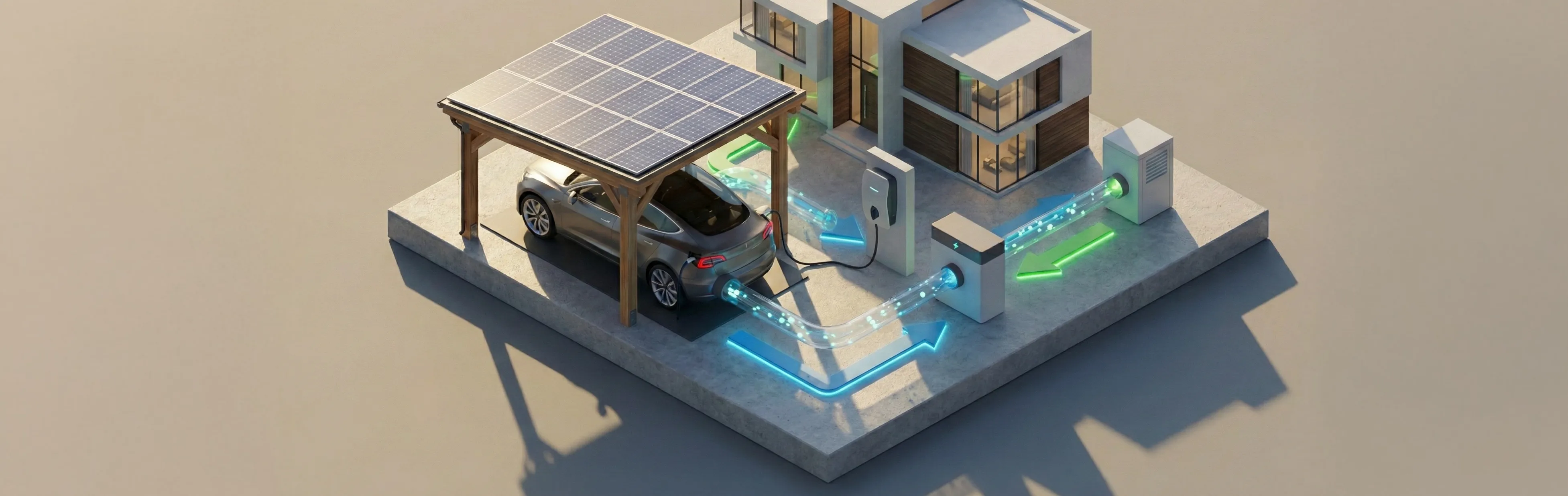
Bidirectional charging pays off for everyone.
With or without solar panels, bidirectional charging lowers costs and creates new revenue opportunities, adding extra value to existing systems.
The annual financial benefit depends on your situation. We will gladly calculate it for you.
Bidirectional Charging: Key Facts
Bidirectional charging integrates your electric vehicle into your home energy system, which an intelligent energy management system manages automatically for optimal energy use while transparently taking current technical limitations into account.
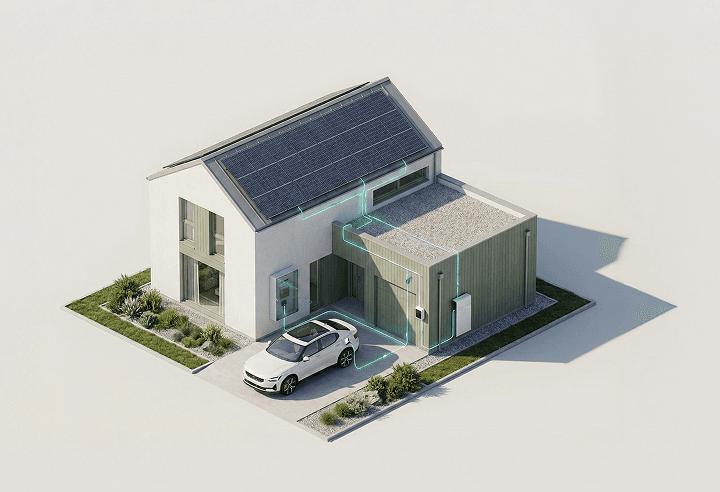
Your car battery becomes part of your energy system
Your EV battery unlocks savings and income while the energy management system automatically optimises energy consumption in real time.
More independence for your home
Capacity comparison:
An electric car battery has five to ten times the capacity of a typical home battery. This allows you to use your solar power for longer and remain independent of the grid for up to several days. Bidirectional charging strengthens your energy system and significantly increases your self-sufficiency.
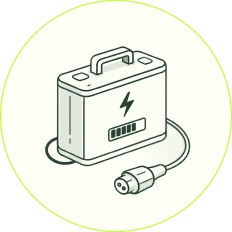
EV battery capacity
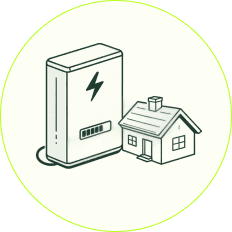
Home battery capacity
Bidirectional charging pays off
With a bidirectional charging station, you make your electric car's battery part of your energy system. Your additional financial benefit: further savings and income.
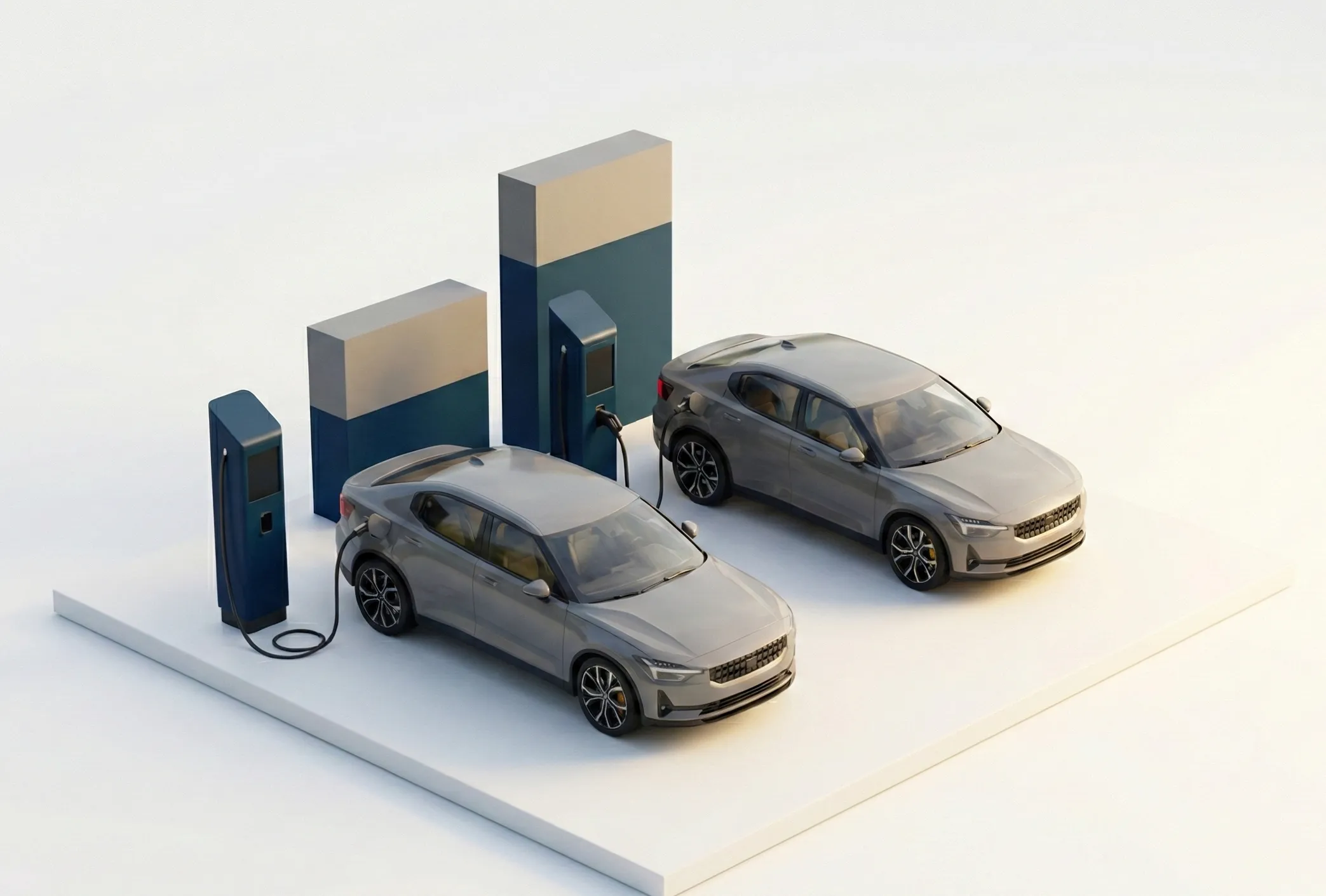
Always full control over the charge level
Via the manufacturer's app, you monitor your EV battery, set a minimum state of charge and optimise the use of surplus energy.
Funding for bidirectional charging stations
Are you interested in a personalized offer?
FreeState's bidirectional charging turns your electric car into a power bank for your home. This saves you electricity costs, generates attractive additional income, and gives you greater independence.
Request your personalized quote now and find out how you can benefit from bidirectional charging.
Request a quote
For which situation would you like a personal, non-binding quote? *
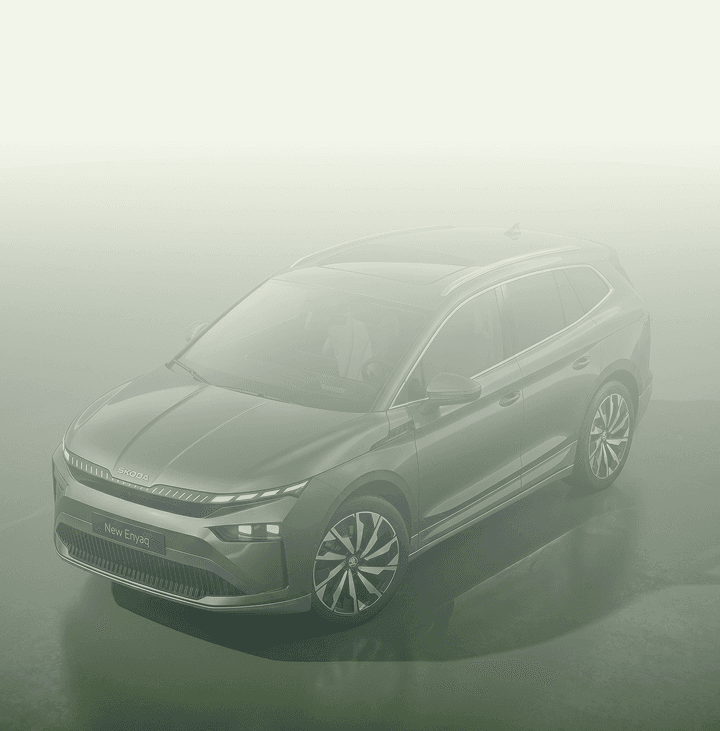
List of electric vehicles that support bidirectional charging.
Many automakers have already launched vehicles that enable bidirectional charging. As more and more automakers adopt bidirectional technology, this list is expected to grow soon.
Types of bidirectional charging
There are various concepts of bidirectional loading; these are the most common:

Standards and Regulations
ISO 15118-20 (2022) defines communication standards for bidirectional charging between EVs and wallboxes. Manufacturers must now deliver compatible, cost-effective systems.
BiDi Newsletter
All our solar projects can easily be extended with bidirectional charging using a suitable energy management system. Interested in the latest information on bidirectional charging? Then sign up for our BiDi newsletter.
Frequently asked questions about bidirectional loading
Bidirectional charging allows your electric vehicle to not only draw power from the grid but also feed it back. Your EV battery becomes a mobile energy storage system that can power your home or support the grid.
Bidirectional charging reduces your electricity costs, generates additional income through grid services, increases your energy independence, and maximizes the use of your solar system.
Key advantages include lower energy bills, potential revenue from flexibility services, greater self-sufficiency, optimized solar energy usage, and a reduced carbon footprint.
Modern EV batteries are designed for thousands of charge cycles. Bidirectional charging within the 20-80% state of charge range minimizes battery degradation, and smart management systems ensure optimal battery health.
Not yet. Bidirectional charging requires specific hardware and software support from the vehicle manufacturer. Currently, select models from VW, Škoda, Cupra, and Ford support this technology, with more expected soon.
Yes. You can save by using stored solar power instead of grid electricity, and earn through flexibility services by making your battery available for grid stabilisation at peak load.
No. The system only discharges between 20-80% state of charge and you can set minimum charge levels. Your driving needs always take priority over home energy supply.
You need a compatible electric vehicle, a bidirectional DC charging station and an intelligent energy management system. A solar system is recommended but not required.
Yes. Bidirectional charging requires a DC wallbox specifically designed for two-way power flow. Standard AC chargers cannot support bidirectional charging.
When used within recommended parameters (20-80% SoC), bidirectional charging has minimal impact on battery lifespan. Check with your vehicle manufacturer regarding warranty specifics.
Yes. Switzerland permits bidirectional charging, and several cantons actively support it through funding programs. The regulatory framework is well-established under ISO 15118-20 standards.
Yes. Several Swiss cantons offer financial incentives ranging from CHF 2,000 to CHF 4,000 per installed bidirectional charging station. Check the funding section for details on your canton.